







The Difference Is How Food Reaches Guests
Passed appetizers are carried to guests on trays, while stationary appetizers sit on a table or display that guests visit. Evolved Catering Baltimore offers both styles through our hors d'oeuvres catering in Baltimore.
This guide compares how each format works, how it affects room flow, and when a mix of both makes sense.
How Passed and Stationary Appetizers Work
Passed Appetizers
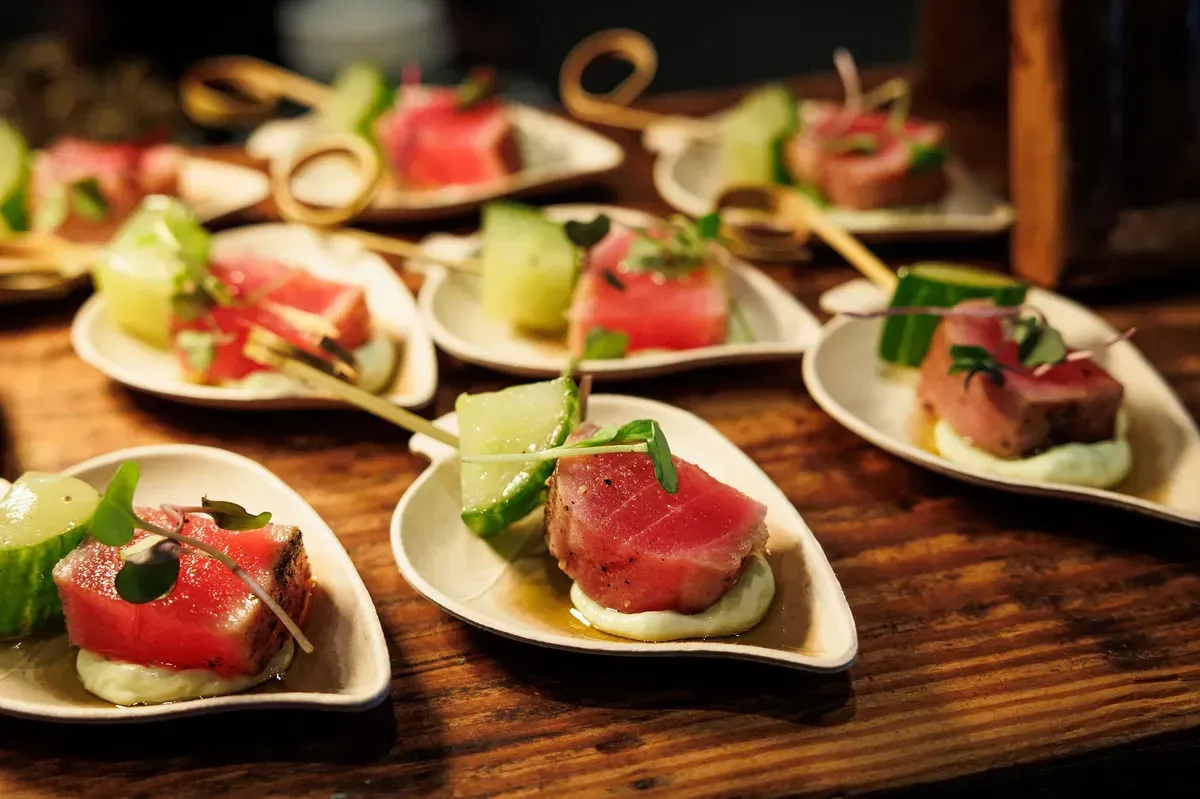
Passed service is also called butler-style service. Servers walk through the crowd with small bites on trays. Guests take one piece and keep talking.
Passed items are usually one or two bites. They should be easy to eat while standing with a drink. No fork should be needed.
This format feels polished. Guests do not have to leave a conversation to eat. It also helps quiet guests who might not walk to a food table.
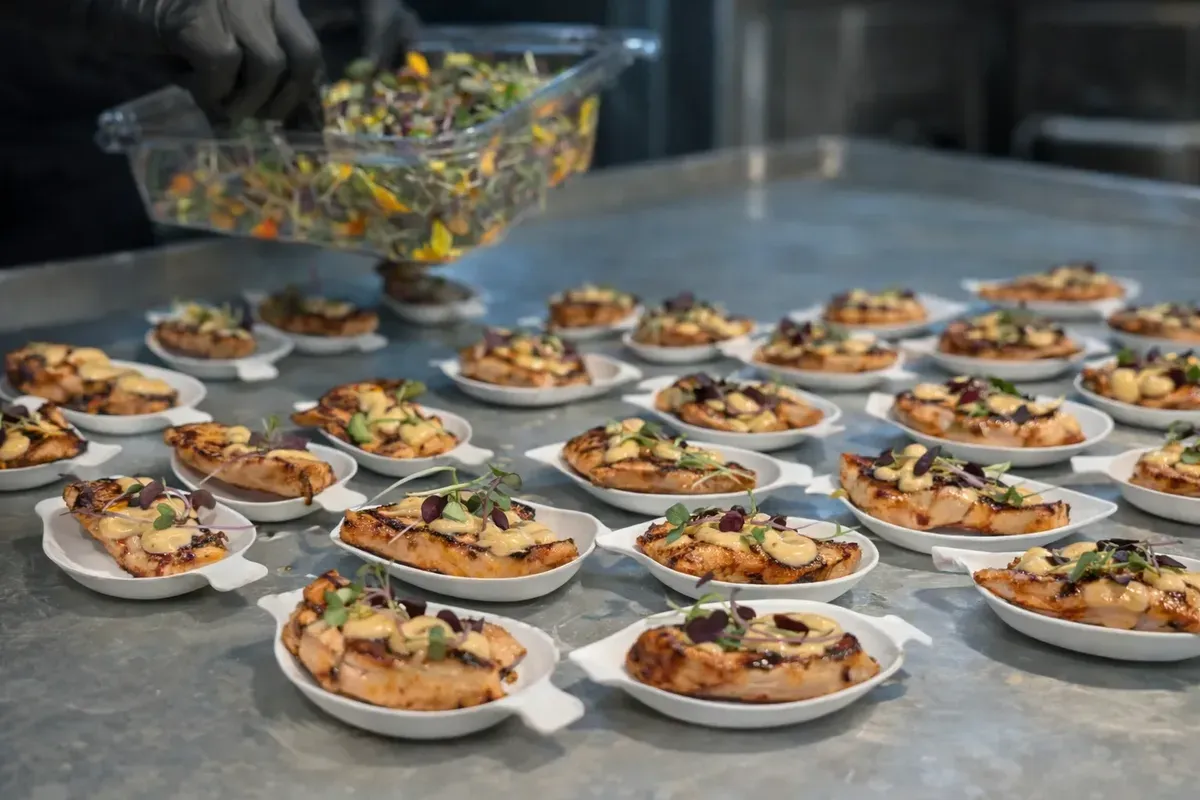
Timing is easy to control with passed service. Hot items can go out right after they leave the oven. Servers can also slow down when the room is full or dinner is about to start.
Stationary Appetizers
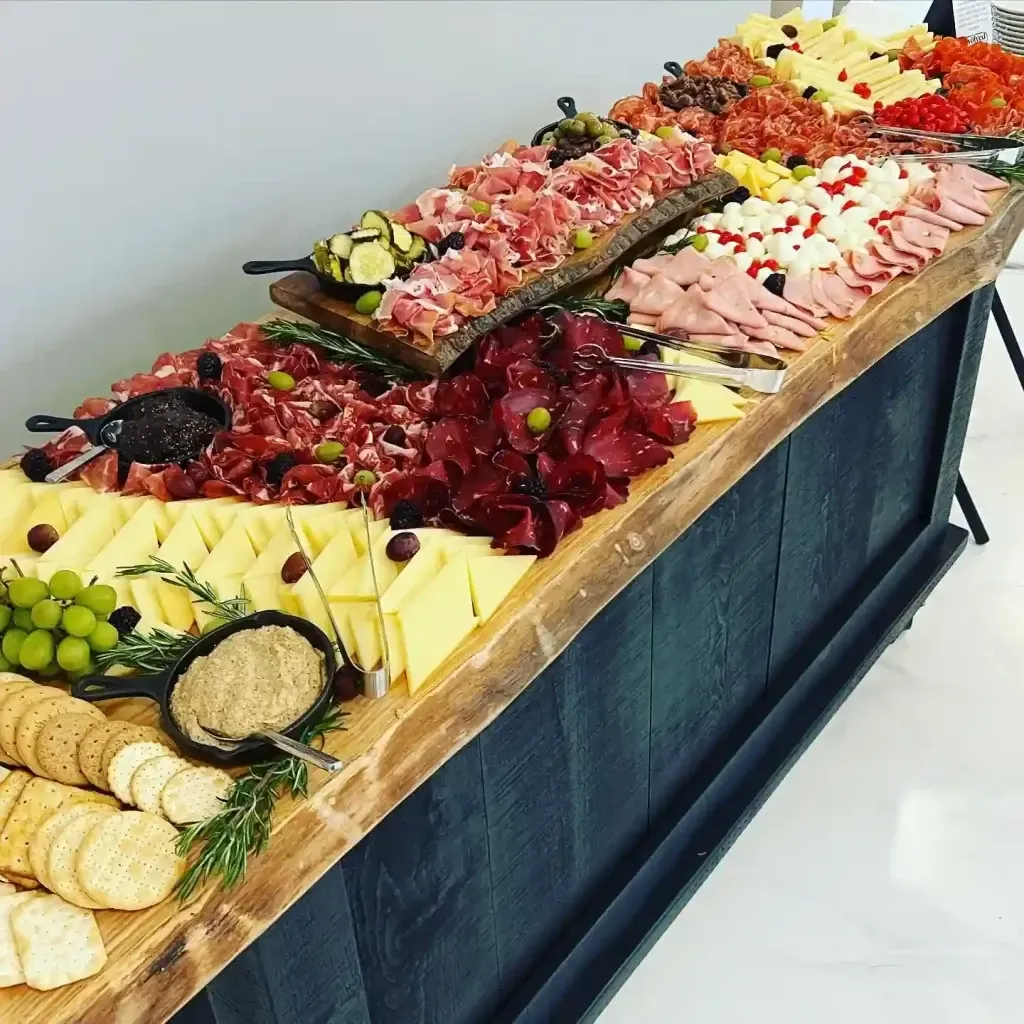
Stationary appetizers sit on a display, board, or table. Guests serve themselves or get help from an attendant. Grazing tables and charcuterie displays are common examples.
Stations can hold more variety at once. Guests can see every choice and pick what they like. The display itself can become a focal point in the room.
Passed service also gives the host some control. The UC Irvine catering guidelines note that tray passing helps control how much food goes out. You can space passes out or save the heaviest passing for when most guests have arrived.
Stations offer a different kind of control. Cold boards and dips can stay out for guests to enjoy over time. Hot items need proper holding equipment and a staff member to watch them.
How Each Format Affects Room Flow and Service
Room layout often decides the format. A long, narrow room can make one station crowded. Passed trays can reach every corner without creating a line.
An open room with good walking space suits a station. Guests can spread out and return when they want more.
Look at entrances and exits too. A station by the door can block new arrivals. Place displays where guests can gather without stopping traffic.
Think about where the bar sits. If the bar and a food display are side by side, lines can merge. Keep some space between them.
Staffing is different too. Passed service needs enough servers to reach the whole crowd. Stations need staff to refill, tidy, and help guests with any questions.
Ask your caterer how many servers will pass food. The Eloise wedding planning guide suggests asking whether staff will pass appetizers and how many servers will be there.
Dietary needs matter as well. Stations can use labels for each item. Servers can explain passed items to guests who ask about allergies.
Think about plates and napkins. Passed bites need cocktail napkins and a place to drop used picks. Stations need small plates, utensils, and a spot for empty dishes.
Match the Format to Standing or Seated Guests
A standing cocktail reception suits passed bites. Guests are already moving. Trays meet them where they are.
When many guests are seated, a station can work well. Guests can get up when they are ready. Servers can also bring bites to tables for older guests or anyone who prefers to stay seated.
Mixed crowds need extra thought. A family event may include young children, older relatives, and guests who stand the whole time. Passing a few bites to seated tables while a display serves everyone else keeps each group comfortable.
Menu choice follows format. Passed items should hold their shape and stay neat in one hand. Station items can be larger, include dips, or need a small plate. Ask your caterer which dishes suit each style before you finalize the menu.
Arrival patterns matter as well. If guests trickle in over an hour, a station feeds early and late arrivals alike. If everyone arrives at once, passed trays can reach the whole crowd quickly.
At Evolved Catering Baltimore, many of our events use both passed and stationed hors d'oeuvres. The right mix depends on guest count, venue layout, and the feel the host wants.
We start with a consultation that covers guest count, venue, event style, and dietary needs. Then we build a service plan with passed items, stations, timing, and staffing. Hosts see the full plan before anything is final.
For a wedding cocktail hour, we time each passed item so the reception moves into dinner smoothly. Our crew handles setup, service, and breakdown.
Photos are another factor. A full grazing table looks striking in pictures. Passed service keeps the room open for photos of people instead of food lines.
How to Choose, or Use Both
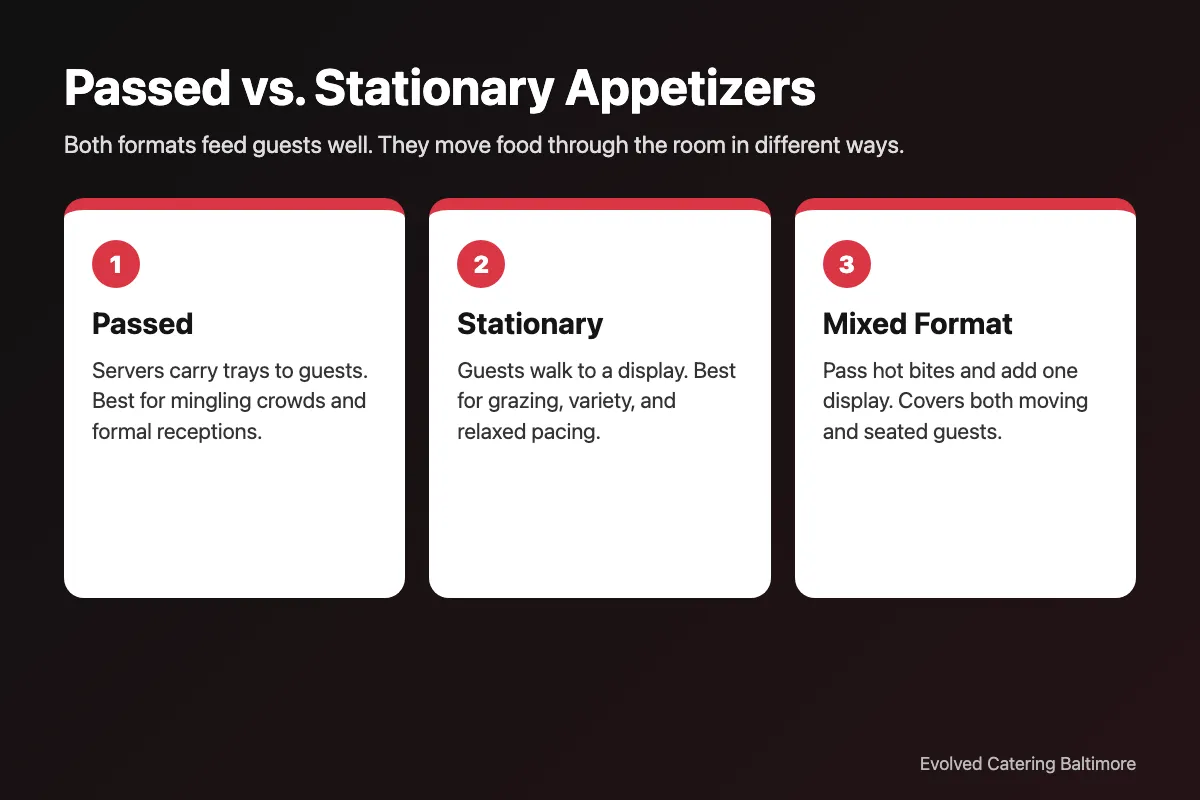
Choose Passed Appetizers When
Your guests will mingle, the room is tight, or the event is formal. Passed bites keep guests talking and the floor clear.
Choose Stationary Appetizers When
You want variety, a relaxed pace, or a display that looks great in photos. Stations also work when guests arrive over a long window.
Choose a Mix When
Your crowd has both standing and seated guests. A common plan passes a few hot bites and adds one cold display. Guests get the best of both.
Think about how long appetizers will be served. A short cocktail hour before dinner may only need a few passed items. A longer reception with no full meal needs more variety and often a station.
Budget and staffing go together. More passed items usually means more servers on the floor. A station can reduce passing but still needs staff to keep it neat and full. Ask your caterer to show both plans side by side.
Share your floor plan with your caterer. Mark the entrance, bar, seating, and any tight spots. That makes the choice much easier.
For quantity planning, see how much food to serve 50 guests. You can also explore appetizer catering in Baltimore for menu ideas.
Frequently Asked Questions About Appetizer Service
Are passed appetizers more formal than stations?
They often feel more formal because servers bring food to guests. Stations can be just as elegant with the right display. The event style matters more than the format.
Can I use passed and stationary appetizers at the same event?
Yes. Many events pass a few bites and add one display. This mix works well when some guests stand and others sit.
Does Evolved Catering Baltimore offer both appetizer formats?
Yes. Our Baltimore team offers passed hors d'oeuvres and stationed displays. We recommend a mix based on your guest count, venue layout, and event style.
Plan Appetizers That Fit Your Room
Evolved Catering Baltimore can design passed bites, stations, or a mix for your event. Call today to talk about your guests and venue.