










The Short Answer on Chafers and Cold Food
No. A chafing dish keeps hot food hot. It cannot bring cool food back up to a safe temperature, and using it that way is one of the easiest ways to make guests sick.
The flame under a chafer is small on purpose. It warms a pan of water, and that water gently warms the food above it. Gentle heat is exactly right for holding. It is the wrong tool for reheating.
Below is what a chafing dish is built to do, the two temperatures that decide everything, and what to do when food arrives cooler than you expected. If you are ordering drop-off catering in Baltimore, it also covers what your caterer should be doing before the trays ever reach your table.
What Is a Chafing Dish Built to Do?
It holds food that is already hot. That is the whole job.
The heat is indirect on purpose
A chafer has three working parts. A fuel can sits at the bottom, a water pan sits above it, and the food pan sits in the water. The flame never touches the food. It heats water, the water turns to steam, and the steam keeps the pan above it warm without drying it out or scorching the bottom.
That design is a feature, not a flaw. Direct heat would burn the edges of a pan of mac and cheese long before the middle warmed up. Steam heat holds a tray of pulled pork at a steady temperature for a couple of hours without turning it to leather.
The trade-off is power. A chafer puts out a fraction of the heat an oven does. It can hold a hot pan hot. It cannot climb a cold pan up to safe.
Health codes say the same thing
This is not just kitchen folklore. A Texas Department of State Health Services flyer puts chafing dishes on the do-not-use list, alongside slow cookers and steam tables, for reheating food.
The Oregon Department of Agriculture is just as blunt. Its food safety guidance says never to use hot holding equipment to reheat food, and that food must be heated to 165 degrees first and then moved into the holding unit.
The reason is time. Cold food in a weak heat source creeps slowly through the temperature range where bacteria grow fastest. It can sit in that range for hours before the middle of the pan ever reads hot.
What Two Temperatures Do You Need to Know?
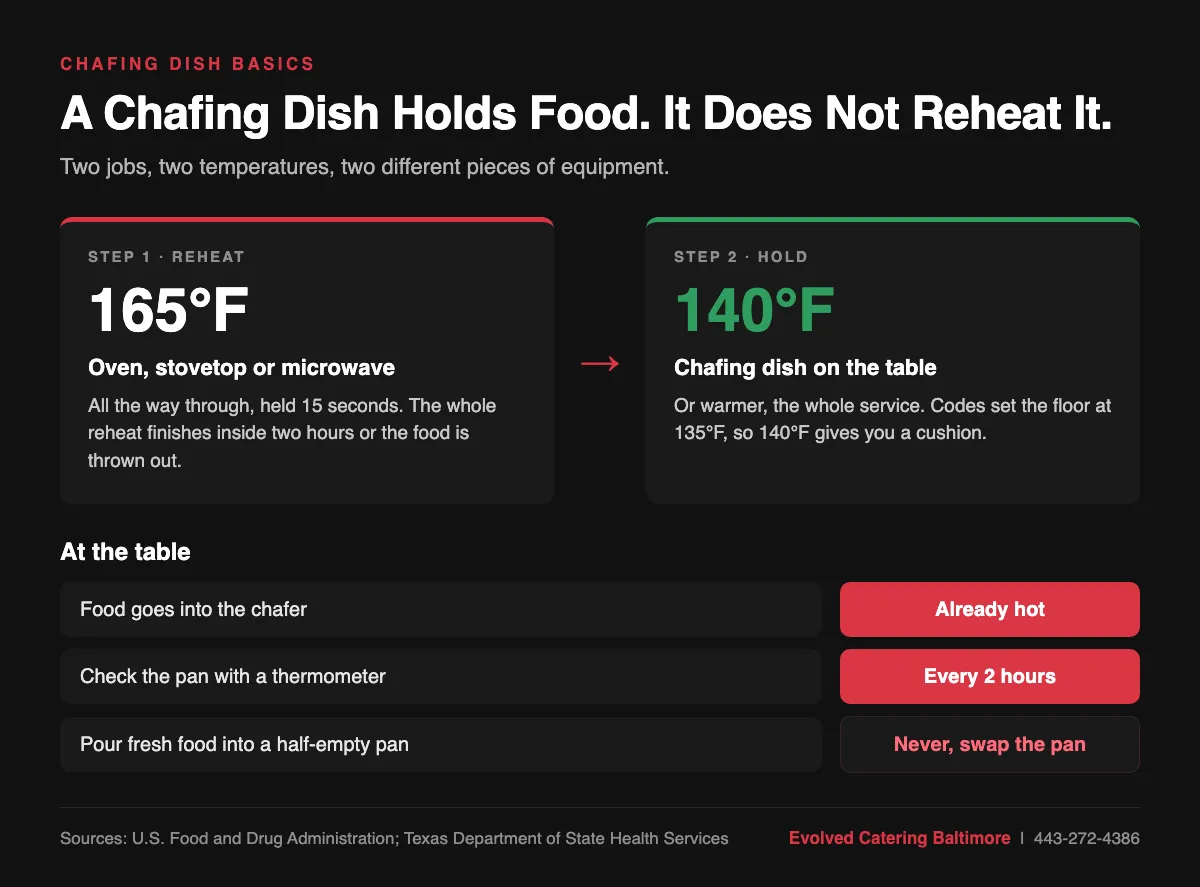
One for reheating and one for holding. Reheat to 165 degrees. Hold at 140 degrees or warmer.
165 degrees, in an oven or on a stove
Food that was cooked and then chilled has to be reheated to 165 degrees all the way through, and held there for 15 seconds. The Texas flyer also puts a clock on it. The whole reheat has to finish inside two hours, or the food gets thrown out.
Use an oven, a stovetop or a microwave. Stir as it heats so the middle catches up with the edges. Then check it with a probe thermometer, not by touching the pan.
140 degrees, once it is in the chafer
The U.S. Food and Drug Administration says hot buffet food should sit at an internal temperature of 140 degrees or warmer. State codes set the legal floor at 135 degrees, so aiming for 140 gives you a cushion when a lid comes off or a door opens.
Check the pan every couple of hours with a thermometer. Keep the lid down between guests. Top up the water pan with hot water when it runs low, or the food dries out and the temperature drops.
One more rule from the FDA that almost everyone breaks. Do not pour fresh food into a serving dish that is already half empty. Swap in a new full pan instead, so older food and newer food never mix.
How Does a Baltimore Caterer Keep Food Hot?
By never letting it get cold in the first place. The chafer is the last step, not the plan.
At Evolved Catering Baltimore, hot dishes are cooked in our own kitchen and packed straight into insulated containers for the drive. They hold their temperature on the way to your office in Canton, your venue in Fells Point or your ballroom in Towson. Our team arrives and arranges the display, so the food goes out hot rather than warming up on site.
On full-service jobs we bring the chafing dishes ourselves, along with the tables, linens and serving utensils. Staff rotates trays and refreshes stations through the event, and temperatures are monitored the whole time. That is the part a rented chafer and a box of fuel cannot give you.
Follow the fuel instructions, every time
Chafing fuel is a small open flame on a table covered in linens and paper napkins. The University of Maryland, Baltimore fire marshal asks anyone using it on campus to follow the fuel manufacturer’s instructions for set up, and the rest of its guidance is worth copying at any event.
Put the can under the dish before you light it. Light it with a butane lighter, never off another burning can. Keep napkins, tablecloths and loose sleeves clear of the flame. Never move a lit can or a dish sitting over one, and never leave a lit can unattended.
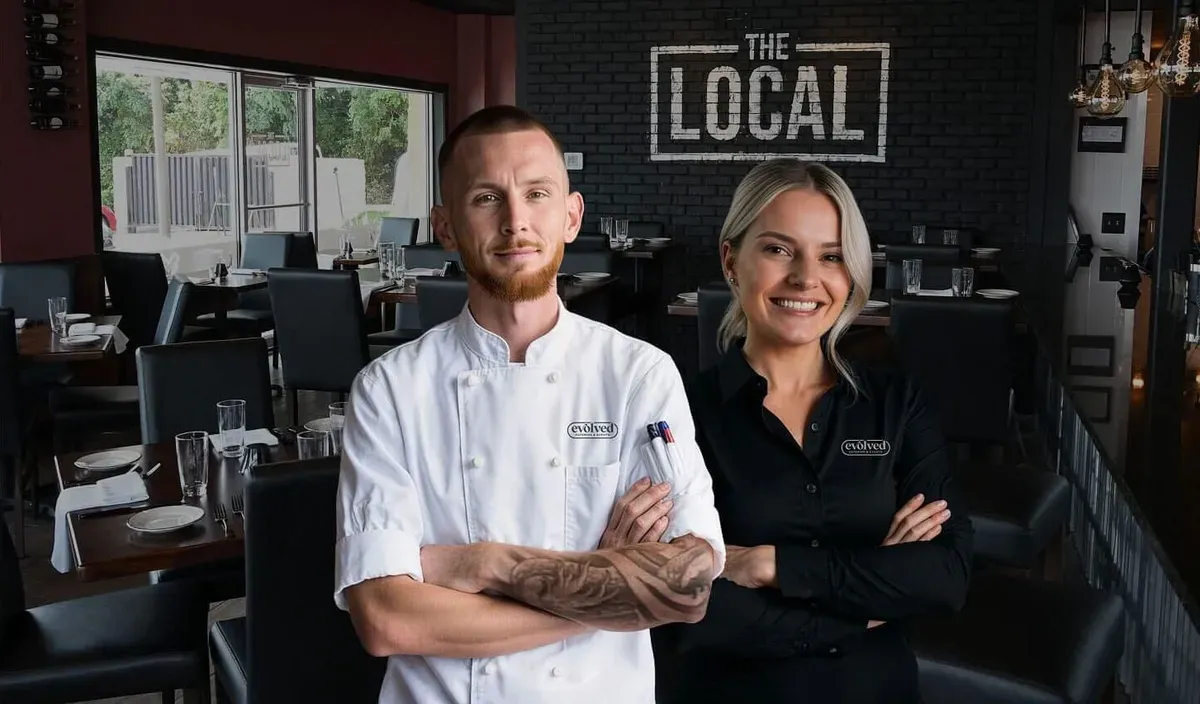
To put it out, slide a snuffer paddle or a saucer over the opening. Let the can cool before you touch it again. Chef Zack Trabbold and Natalie Trabbold built the service around that kind of detail, and it is a big part of why the business holds a 4.7 star rating across more than 1,600 reviews.
What Should You Do If Food Arrives Cool?
Take its temperature before you decide anything. A probe thermometer in the middle of the pan answers the question in ten seconds.
If it reads 140 degrees or higher, you are holding, not reheating. Light the fuel, close the lid and start serving.
If it reads lower, the chafer is not the answer. Move the pan to an oven and bring it to 165 degrees, then put it back over the water. If there is no oven on site, call the caterer before you serve it rather than hoping the flame catches up.
The clock matters too. Food that has been sitting out with no heat has a limited window, and that is a separate question worth reading on its own in our guide to how long buffet food can sit out.
Match the service style to the menu
Some menus dodge the problem entirely. A cold spread has no holding temperature to miss, which is one reason people compare a grazing table and a charcuterie board when the venue has no kitchen.
Other menus need a trained crew for reasons that have nothing to do with heat, like the supervision rules that separate kosher from kosher-style catering. Decide how the food will be held before you pick the menu, and the rest gets easier.
Frequently Asked Questions
Do you put hot or cold water in a chafing dish?
Hot water, about an inch or two in the water pan. Cold water from the tap can take ten minutes or longer to come up to temperature, and your food cools down while it waits. Fill the pan with hot water, light the fuel, then set the food pan in.
How long will a chafing dish keep food hot?
As long as the fuel burns and water stays in the pan, which is usually two to four hours. Gel and wick fuels vary a lot, so read the burn time printed on the can before you buy. At longer Baltimore events we swap in fresh cans and top up the water rather than letting either run out.
Can you cook raw food in a chafing dish?
No. A chafer does not get hot enough to cook raw meat, poultry or seafood safely, and the food would spend hours in the temperature range where bacteria grow. Cook it in an oven or on a stove, confirm the internal temperature with a thermometer, then move it to the chafer to hold.
Hot Food, Delivered Hot, Across Baltimore
Evolved Catering Baltimore cooks, packs and sets up hot menus for offices, weddings and parties from the Inner Harbor to Towson and across the DMV. Tell us the room and the headcount, and we will tell you exactly how the food will be held.