
Who Handles What When You Cater at a Community Hall?
A community hall catering checklist gives every job one owner: the hall, your volunteers, or your caterer. When each task has a name beside it, nothing falls through the cracks. Shared spaces need this more than most, because other groups use the same kitchen, closets, and keys.
Evolved Catering Baltimore offers buffet, plated, station, and drop-off service styles. The style you pick changes which jobs stay with your group. This checklist adds the hall side of the plan to our Baltimore event catering page.
Work through each section with your hall contact first. Then send the finished list to your caterer in writing, so everyone plans from the same page.
Take Stock of the Hall and Anything You Borrow
Start with a walk-through while the room is empty. Bring your phone and take photos of every closet, counter, and outlet. Those photos answer questions later without another trip.
Tables and Chairs
Count the tables and chairs the hall actually has, not the number on the rental form. Check for wobbly legs and broken folding latches. Ask whether your group or the hall staff sets them up and puts them away.
Kitchen Access
Ask if the kitchen comes with your rental or costs extra. Find out which fridge, counters, and sinks you may use. Some halls lock part of the kitchen for a group that rents it full time.
Borrowed Items
Many hall events run on borrowed coffee urns, coolers, and serving spoons. Write down who lent each item and who returns it. Put a strip of tape with the owner's name on everything borrowed.
What the Hall Does Not Supply
Many halls provide the room and little else. Plates, linens, trash bags, and paper towels are often up to you. Ask the hall directly, then decide whether your caterer or your volunteers bring them.
Share this list with your caterer before the menu is final. A dish that needs holding space only works if the hall has room for it.
Split the Work Between Volunteers and Your Caterer
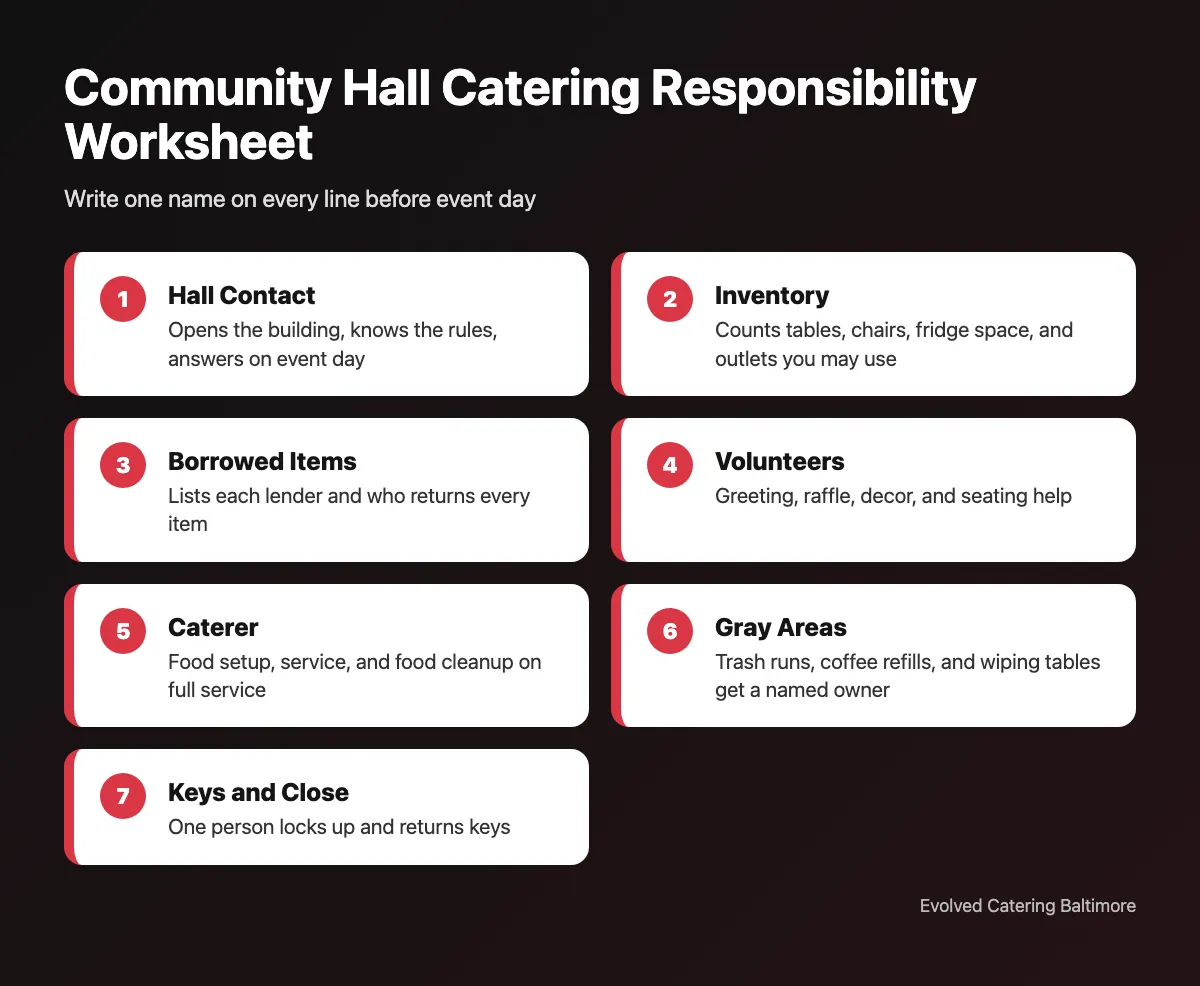
Volunteers are generous, but they also want to enjoy the event. Give them clear, short jobs and let the caterer own the food. Use the worksheet below and write one name on every line.
Hall Contact
Name the person who opens the building and knows the rules. Get a phone number that works on the event day, not just during office hours.
Volunteer Jobs
Good volunteer jobs include greeting guests, running a raffle table, and decorating. Setting out name tags and guiding people to seats also fit well. Keep volunteers out of hot food handling unless your caterer agrees.
Caterer Jobs
On a full-service plan, the caterer handles food setup, service, and food cleanup. On a drop-off plan, your group takes over once the food is delivered. Confirm which one you booked.
Gray-Area Jobs
Trash runs, coffee refills, and wiping tables often get missed. Assign each one to a person by name. Do not leave these jobs to whoever notices first.
Serving Window
Write down when food should be ready and when service ends. Share it with volunteers so speeches and raffles do not land during the buffet line.
Plan Around Shared Storage and Tight Time Windows in Baltimore
Some Baltimore community halls sit in older buildings with small kitchens and few storage closets. Other groups may keep their supplies in the same fridge. Ask which shelves are yours, and label anything you leave overnight.
Rental times are often strict because another group books the room after you. Ask when you can get in for setup and when you must be out. Your caterer needs both times to plan arrival and pack-up.
Parking and loading can be tight on narrow city streets. Ask the hall where a van can stop to unload and which door is closest to the kitchen. Some halls have a side or back entrance that avoids stairs.
Stairs matter in older buildings. If the hall is up a flight or down in a basement, tell your caterer early. Carrying hot food and equipment takes more time on stairs.
Evolved Catering Baltimore can plan setup around the hall's entry, loading spot, and time limits. Send those details in writing so the team can arrive ready.
Close Out the Hall and Send Your Caterer the Final Plan
Cleanup is where shared halls cause the most arguments. Get the hall's own closing list and match each item to a person. Ask what happens to your deposit if something is missed.
Cleaning Split
Your caterer typically clears food, serving pieces, and their own equipment on a full-service plan. Your group may still need to stack chairs, sweep, and empty trash. Confirm this split before event day.
Keys and Lockup
Pick one person to hold the keys from start to finish. That person checks the fridge, turns off lights, and locks every door. Then they return keys the way the hall asks.
What to Send Your Caterer
Send your guest count, hall address, loading details, and setup and exit times. Add photos of the kitchen and the finished responsibility worksheet. Include the hall contact's phone number.
Hosting a fundraiser with speeches? Pair this list with a fundraiser run-of-show worksheet. For one big open room, a loft event catering floor plan can help you place stations and seating.

Community Hall Catering Questions
Sometimes, but it depends on your caterer and service style. With drop-off catering, your group usually handles serving after delivery. With full service, the caterer's staff serves. Ask your caterer and your hall before you plan volunteer roles.
It depends on your rental agreement and your catering plan. Caterers on full service usually clear their own food and equipment. Your group may still own the hall's closing tasks. Write the split down so your deposit is not at risk.
Ask about kitchen access, fridge space, setup and exit times, and where a van can unload. Some Baltimore halls are in older buildings, so ask about stairs too. Get the hall's rules in writing and share them with your caterer.
Plan Your Community Hall Event With a Clear Split
Evolved Catering Baltimore can help you sort caterer jobs from hall and volunteer jobs for your Baltimore event. Call to talk through your hall, guest count, and service style.