

Put Catering on the Call Sheet, Not in Side Texts
A production crew catering call sheet gives your caterer the meal window, headcount, and drop location in one place. It replaces scattered texts and rushed calls from set. When the schedule shifts, everyone works from the same updated page.
This worksheet fits corporate video shoots, commercials, and small crews filming around Baltimore. Start with our Baltimore corporate catering page for service styles and drop-off options. The difference on set is a clock that can move at any moment, sometimes more than once a day.
Evolved Catering Baltimore offers boxed lunch and drop-off catering, and clear details make a crew order easier to plan. Below, you will find what to put on the sheet. You will also see how to handle changes once the day is underway.

Set the Meal Window, Contacts, and Counts by Unit
Give a Meal Window, Not Just a Time
List the earliest and latest time the crew could break to eat. Shoots run long, and a planned lunch often moves. A window lets your caterer choose food that holds up if the break slides.
Note whether meals should arrive before the window opens. Food waiting nearby while a scene wraps is better than a crew waiting on food. Ask your caterer how early a drop makes sense for your menu.
Name One Production Contact
Pick one person who talks to the caterer on shoot day. That is often a production coordinator or a production assistant. Put their name and cell number on the sheet.
Everyone else sends catering changes through that contact. Directors and department heads are busy on set. One voice keeps the caterer from getting mixed instructions.
Add a Backup Contact
Phones go silent during takes. Add a second person who can answer when the main contact cannot. Say which one to call first.
Count by Unit
Split the headcount by unit, such as the main unit, a second unit, and office staff. Units may break at different times or in different places. Separate counts keep one group from running short.
Call-Sheet Catering Fields and Change Control
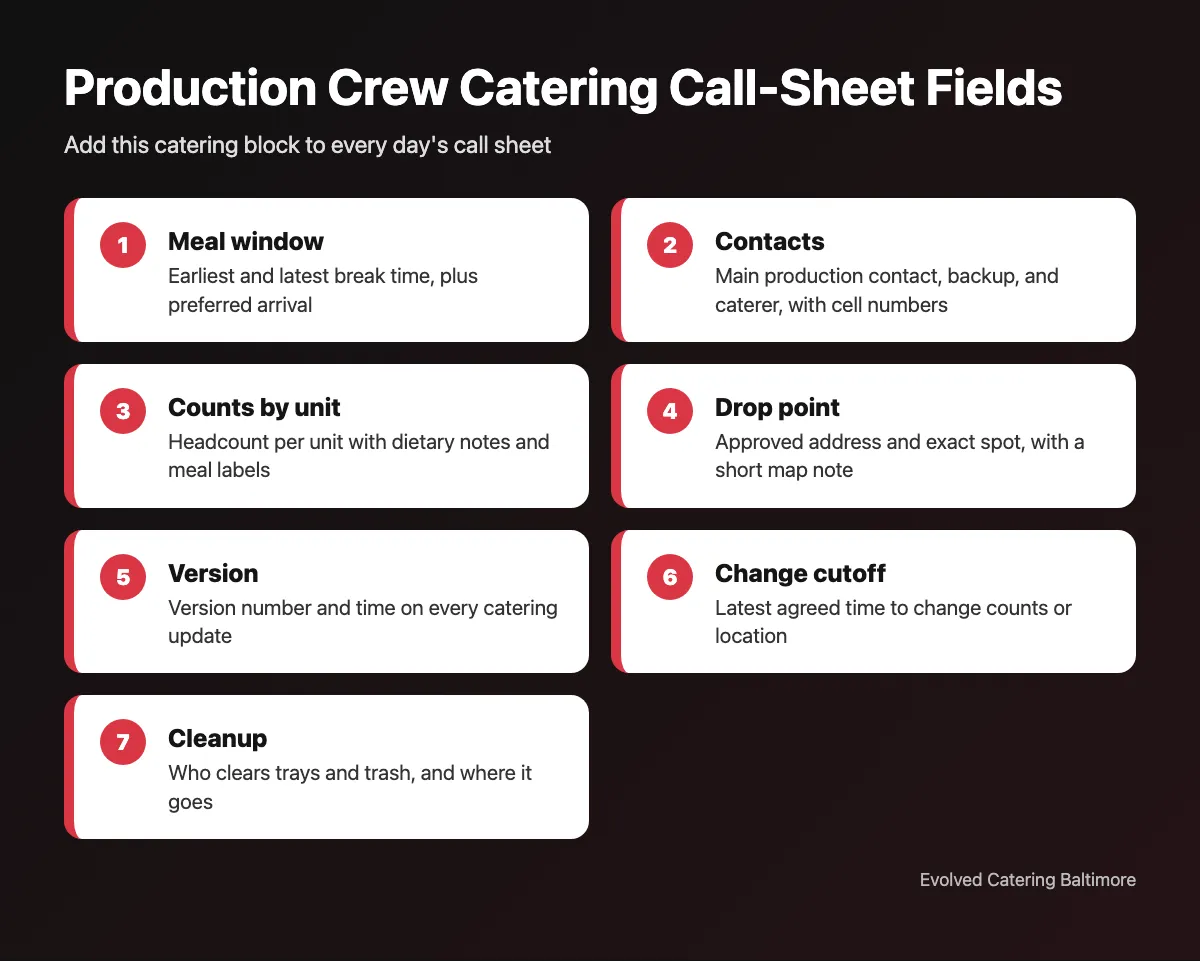
Your call sheet already holds the day's schedule. Add a catering block so your caterer sees only what they need. Keep the same field order every day so changes are easy to spot.
Date, Address, and Drop Point
List the shoot date, the full address, and the exact approved drop point. A drop point might be a holding room, a side lot, or a lobby. Add a short map note if the spot is hard to find.
Counts by Unit and Dietary Notes
Give each unit's headcount and any dietary needs, like vegetarian or gluten-free. Ask for meals labeled by unit if groups eat apart. Note anyone who eats at a separate time.
Meal Window and Contacts
Repeat the meal window, main contact, and backup contact in the catering block. Add your caterer's contact too. Everyone should see the same names in the same place.
Version Number and Change Cutoff
Put a version number and time on every catering update. Agree with your caterer on the latest time counts or locations can change each day. After that cutoff, the main contact calls first and then sends a new version.
Cleanup and Trash
Note who clears trays, packaging, and trash after the meal. Your location agreement may require the space left as you found it. Write down where trash can go.
Baltimore Locations, Company Moves, and Quiet Handoffs
Shoots around Baltimore may use row home blocks, older warehouses, or waterfront spots. Each one comes with its own parking and access limits. Only list a drop point that your location agreement allows.
Narrow streets can leave no room for a delivery vehicle to stop. Tell your caterer where a vehicle can pull in without blocking your trucks or the neighbors. A side street or nearby lot may work better than the set address.
Plan a Quiet Handoff
A delivery should never walk into a live take. Set a handoff spot away from set, such as a holding room or lobby. Ask the driver to text the main contact on arrival instead of knocking.
Tell your caterer whether to wait for a signal before unloading. Carts, doors, and lids can all make noise. A short pause can save a take.
Handle a Company Move
If the crew moves to a new location, the meal may need to follow. Mark the move time and new address on the call sheet. State clearly which location gets the meal if the move lands near the break.
Waterfront spots near the harbor can turn windy fast. Plan a covered or sheltered place to set out food. Keep lids on until the crew is ready to eat.
What to Send Your Caterer Before the Shoot
Send the catering block of your call sheet with your first request. Include the shoot dates, rough counts by unit, and any location limits you know. Mark anything still unconfirmed so your caterer can plan around it.
Ask whether individual meals or a shared spread suits your break. Individually packed meals hand out fast and can be labeled by unit.
Evolved Catering Baltimore can then confirm what works for your date, location, and meal window. Send later updates through your production contact as the call sheet changes.
Filming on a school or college property? Start with the campus catering approval checklist before you book food. For crews that eat in waves, the staff catering shift handoff plan shows how to split and label meals.
Production Crew Catering Call Sheet Questions
Add the meal window, counts by unit, dietary notes, and the exact drop point. Include the production contact, a backup, and the caterer's number. A version number helps everyone find the latest update.
Build some room for delays into the meal window from the start. Ask your caterer which menu items hold up well if the break slides. Have your production contact call as soon as the schedule moves.
It can work if the move is on the call sheet with a time and address. Baltimore traffic and parking can slow a route, so share changes early. Confirm which location gets the meal before shoot day.
Feed Your Crew Without the Guesswork
Evolved Catering Baltimore can plan crew meals around your call sheet for shoots in Baltimore. Call to share your dates, counts, and locations.